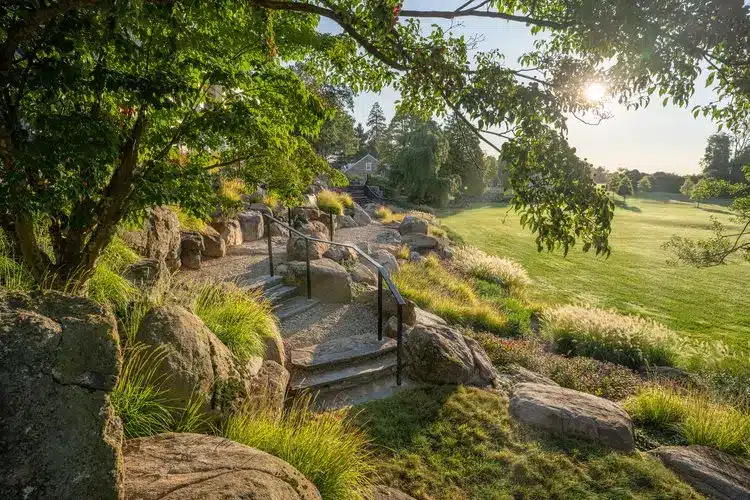
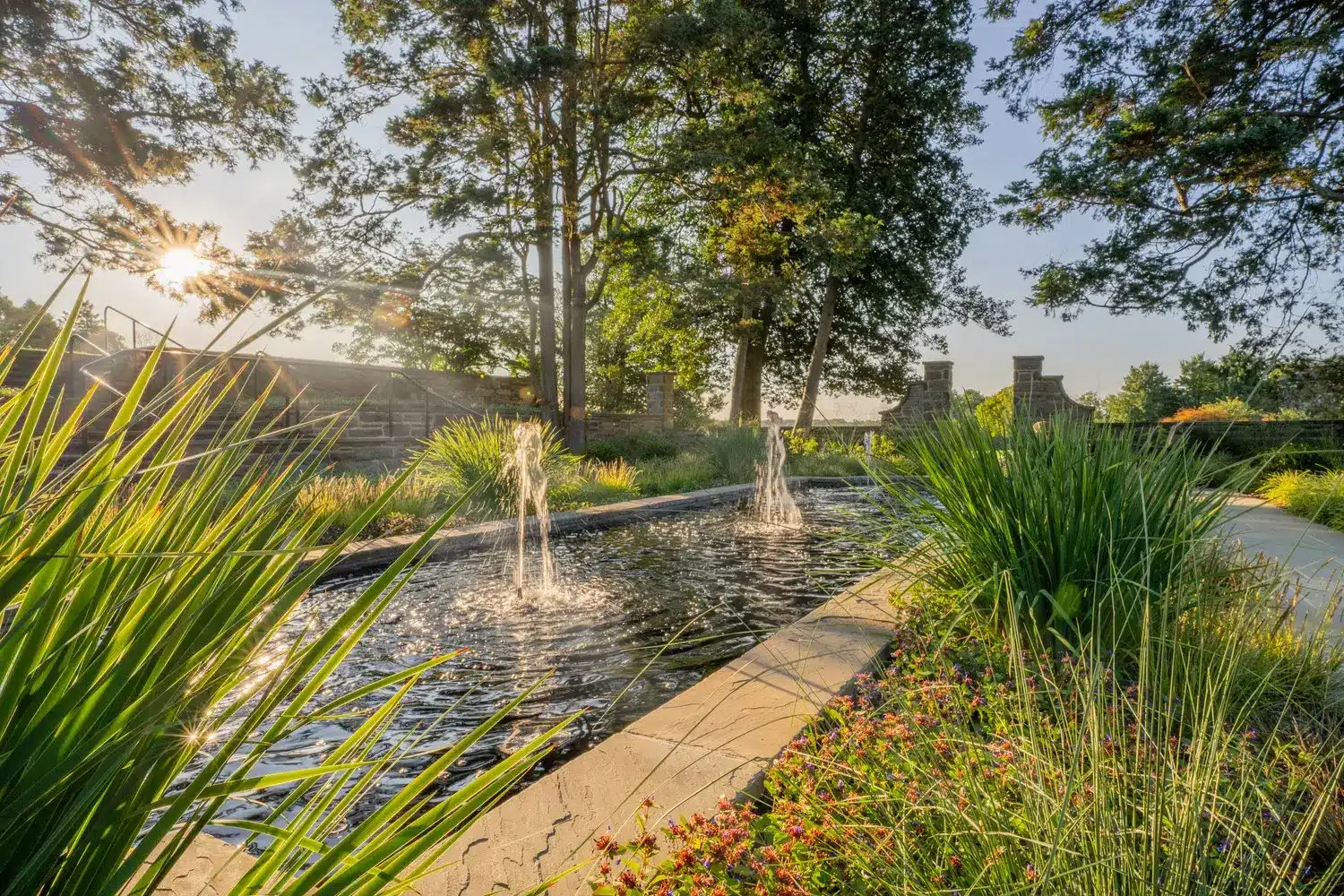
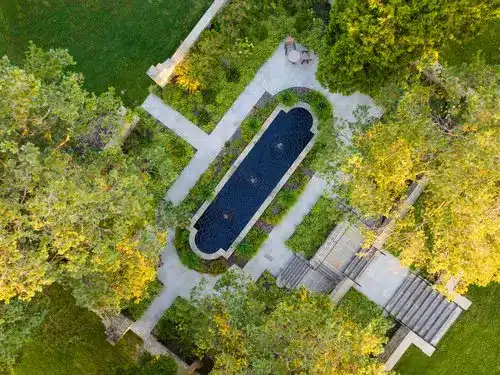
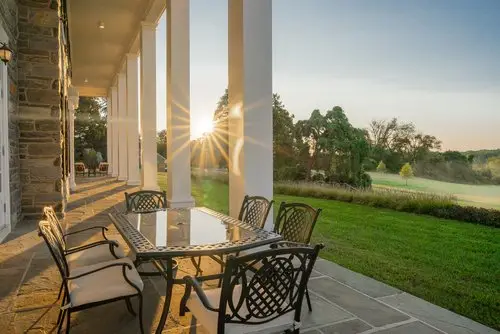
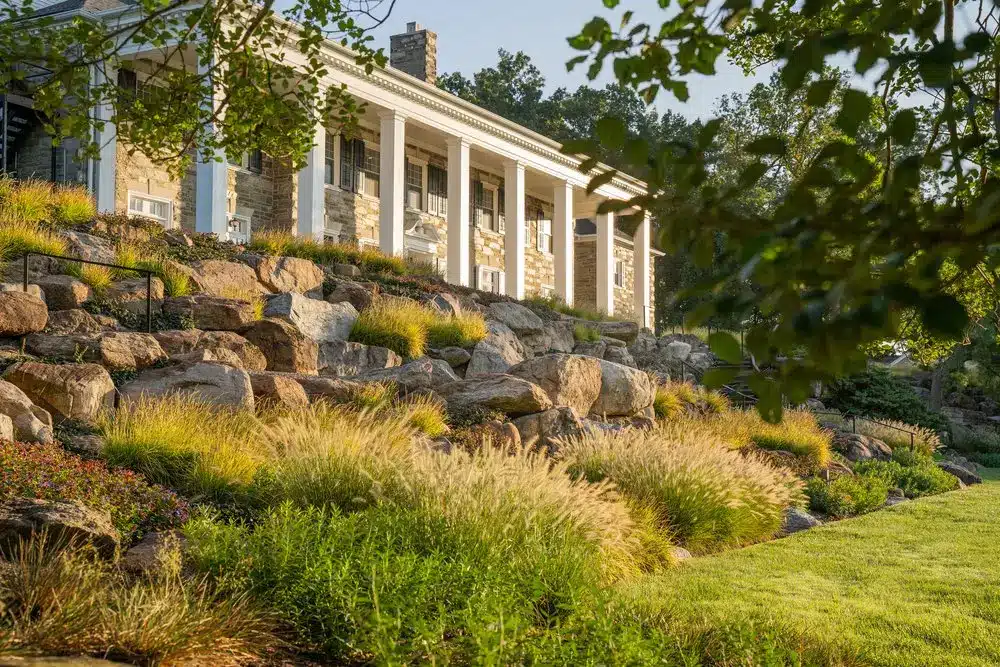
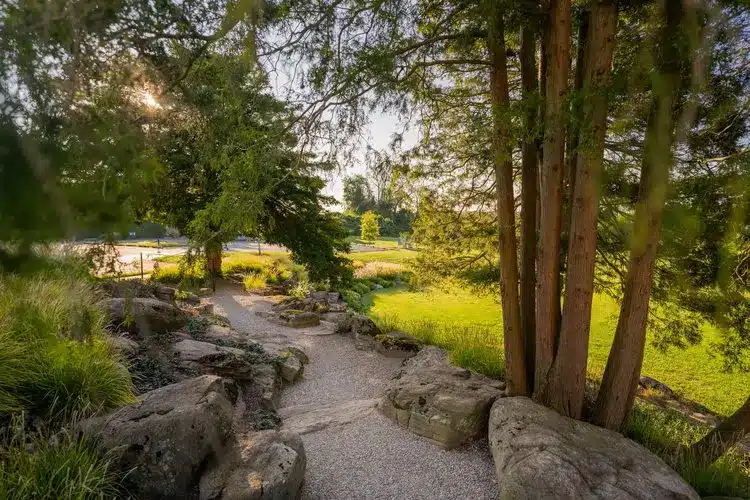
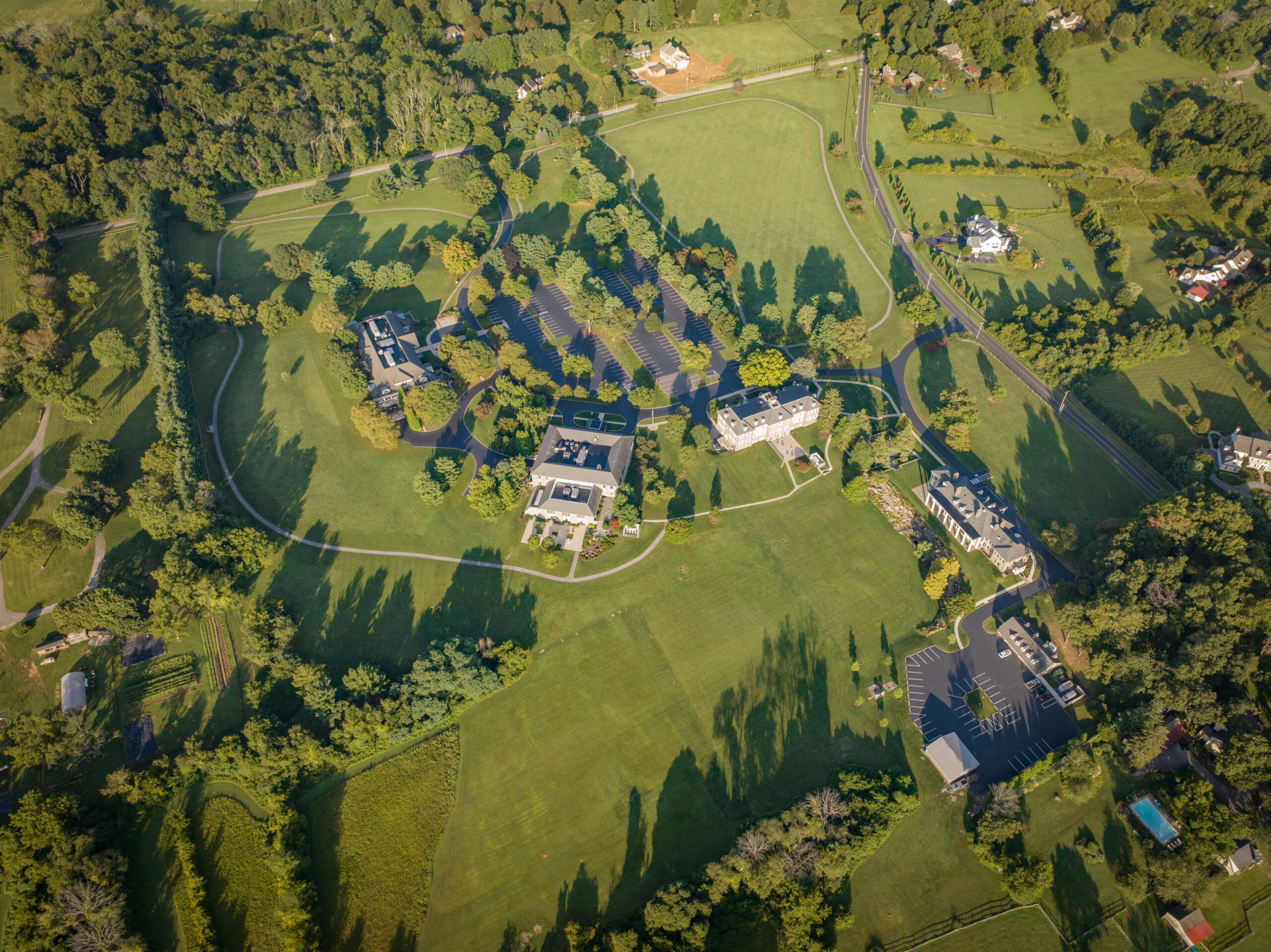
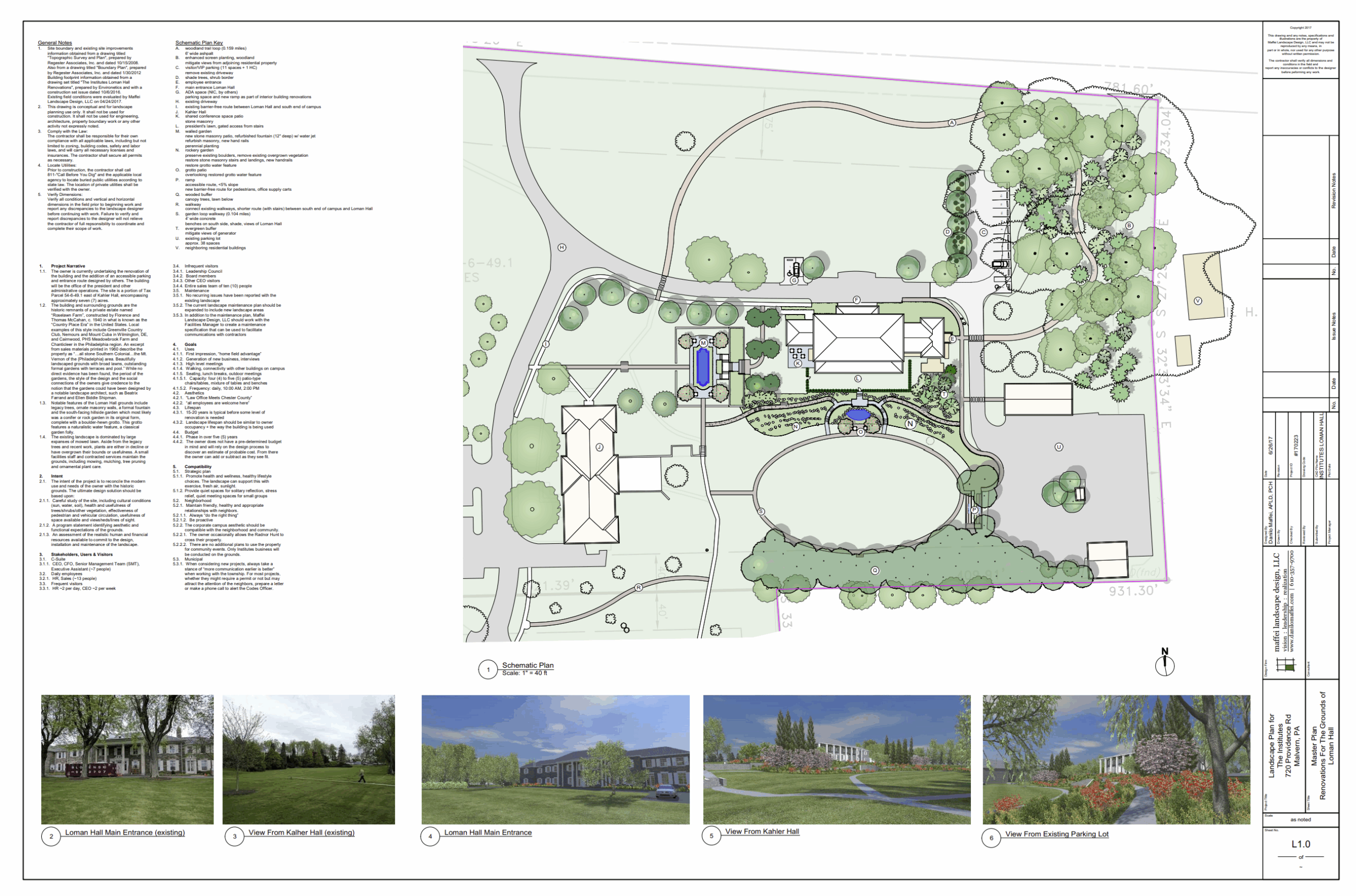
A grand family estate outside of Philadelphia, Loman Hall exists among the likes of Chanticleer, Nemours, and Mt. Cuba, with its legacy gardens, grotto, rockery and formal fountain. Rather than be converted to a horticultural and architectural showcase, the 7000 sq. ft. mansion and grounds were envisioned as a corporate headquarters that provided both utility and aesthetic inspiration. Our team was engaged to create this duality and walk the balance between form and function.
Charged with the President’s vision of a vibrant workspace and awe-inspiring setting for visitors, we had our work cut out for us. For starters, historic homes are not easily converted to modern commercial use. Further, its corporate designation represents a deviation from existing zoning and creates complications for the addition of impervious cover spaces such as parking lots, sidewalks, and roads. To clear these usage and permit hurdles, we worked hand in hand with a team of consultants.
Next, we managed a multidisciplinary construction team to address tree preservation, historic masonry restoration, irrigation, metal fabrication, electrical systems, and more. Every decision was guided by long-term cost efficiency and environmental responsibility. While Loman Hall was designed to impress both employees and visitors, it also needed to operate within budgetary limits—not just during construction but well into the future. Much like the restoration of existing architectural features, the new garden spaces were created for durability and ease of care, requiring minimal mulching, limited weeding, and no supplemental irrigation. Balancing fiscal, environmental, and historical constraints, we were able to return Loman Hall to its former grandeur while adapting it into a functional commercial space.
Malvern, Pennsylvania
Scope of Work
• Pathways
• Water
• Transformations
• Master Planning
• Circulation
• Slope & Stormwater
Awards
• Gold Award in Non
Residential Design from the
Association of Professional
Landscape Designers
• Award of Merit from the
Perennial Plant Association